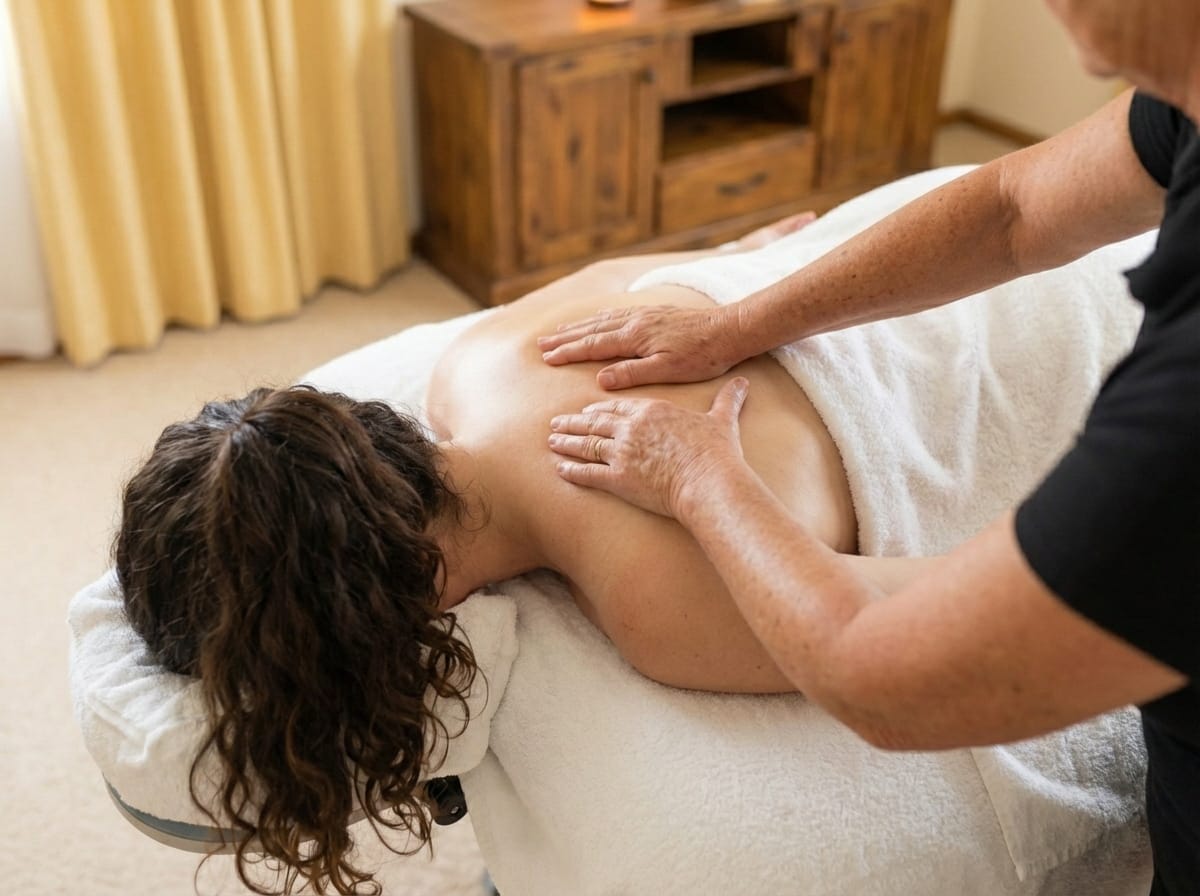
If you’re a parent, or have family responsibilities as your number one priority, there’s a good chance you’re carrying more than you realise. Not just the obvious things, work, family, responsibilities, life admin, but the constant background load of being the organiser, the supporter, the problem-solver, the one who keeps everything moving.
And over time, your body starts to keep score.
You might feel tired even after sleeping. You may get headaches more often, feel heavier in your muscles, or notice your patience is thinner than it used to be. Some days you feel like you’re running on fumes, but you still push through, because that’s what you’ve always done.
Stress and fatigue don’t just live in your mind. They live in your nervous system and your body.
And one of the most effective, underrated ways to help your body recover is regular massage.
This isn’t about luxury or indulgence.
It’s about restoring your energy, calming your nervous system, and helping your body actually recharge.
Stress and Fatigue Aren’t Just “A Busy Season”
Many women are told that feeling exhausted is normal, that it’s just life, just aging, just menopause, just hormones.
But ongoing stress has a physical impact. When your body stays in “go mode” for too long, it can lead to:
- Constant tension in the shoulders, neck, and jaw
- Shallow breathing and tight chest muscles
- Digestive discomfort (bloating, reflux, appetite changes)
- Poor sleep quality (waking up tired, restless nights)
- Headaches or tight pressure behind the eyes
- A nervous system that feels wired… but also drained
- Lower resilience to everyday stress
Your body isn’t being dramatic.
It’s responding exactly the way it’s designed to, protecting you, bracing you, staying alert.
The issue is that this state becomes your baseline.
The Nervous System Reset Most Women Actually Need
When you’re stressed, your body shifts into a “fight or flight” response, even if the threat is not physical.
Deadlines, family pressure, decision fatigue, constant notifications, unpredictable schedules… your nervous system processes it all as load.
In that state:
- muscles tighten
- breathing becomes shallow
- circulation shifts away from restoration
- digestion can slow down
- sleep becomes lighter
- recovery becomes harder
Massage helps your body shift from survival mode into healing mode.
That’s why people often feel calmer after a session, not because their problems disappeared, but because their body finally got permission to exhale.
How Regular Massage Helps With Stress + Fatigue
A one-off massage can feel good. But regular massage creates cumulative results, like training your body to return to calm more easily.
Here’s what consistent sessions can support:
1) Deep physical relaxation (that you can’t “think” your way into)
When your muscles release, your brain often follows.
Massage can unlock tension you didn’t even realise you were holding, especially in the shoulders, jaw, scalp, hips, and lower back.
2) Better sleep quality
Stress and fatigue often create a loop: you’re tired, but you can’t fully switch off. Massage helps lower physical tension and supports nervous system regulation, making it easier to fall asleep and stay asleep.
And if you’re in your 40s or 50s, this matters even more, because good sleep becomes the foundation for everything else: mood, energy, metabolism, motivation, and hormonal balance.
3) Less “heavy body” fatigue
Stress doesn’t just drain you mentally, it can make your body feel heavy, sluggish, and sore. Massage boosts circulation, supports tissue recovery, and helps reduce that dragged-down feeling that makes everything feel harder than it should.
4) Fewer headaches and tension symptoms
A huge percentage of stress symptoms show up through muscle tension, neck tightness, jaw clenching, shoulder pain, scalp tension.
Massage targets the physical side of stress so your body stops broadcasting “alarm signals” all day long.
5) A calmer baseline over time
This is the part most people don’t expect: regular massage doesn’t just relax you for an hour, it can help your whole system become less reactive.
When your body gets consistent support, you start to notice:
- you don’t tense up as quickly
- your shoulders don’t creep up as much
- you breathe deeper without thinking
- you recover faster from hard weeks
- you handle stress with more capacity
That’s real healing, not just a temporary pause.
Why Women 40+ Benefit So Much From Regular massage
After 40, many women start living in a cycle of “push through, crash, repeat.”
You do the work. You hold the household. You keep the momentum.
Then your body forces a slowdown through exhaustion, tension, or burnout symptoms.
Regular massage becomes a way to interrupt that cycle, before your body hits the wall.
Because at this stage of life, stress isn’t always dramatic.
It can be quiet, constant, and cumulative.
And it often shows up as:
- waking up tired no matter what
- feeling “flat” or unmotivated
- always feeling behind
- muscle aches without a clear reason
- irritability and short fuse
- mental fog or forgetfulness
- feeling like you never get a proper break
Massage helps by giving your body a reliable recovery anchor.
The “Best Type” of Massage for Stress and Fatigue
If your goal is nervous system recovery and energy restoration, the best massage sessions are usually:
- medium pressure (not aggressive deep tissue)
- slow, rhythmic, grounding techniques
- focused on areas you store stress: neck, shoulders, upper back, jaw, hips
- paired with calm breathing and enough time to fully drop in
Some women love firm pressure, and that’s totally fine, but stress recovery massage should never feel like you’re bracing your way through it.
The goal isn’t to “fix you.”
It’s to help your body feel safe enough to release.
How Often Should You Book for Real Results?
If you’re working through fatigue or long-term stress tension, consistency is what creates change.
A good starting rhythm is:
- Every 2 weeks for 4, 6 sessions (reset and recovery phase)
- Then monthly for maintenance
- Or weekly during high-stress periods (busy work season, major life events, hormonal shifts)
Think of it like nervous system hygiene, the same way you might prioritise movement, nutrition, or sleep.
Signs Your Body Is Asking for Massage Support
You don’t need to “earn” rest.
But if you want a clear signal, these are your green lights:
- you feel exhausted but wired
- you’re clenching your jaw without realising
- you feel like you can’t fully relax, even on days off
- your shoulders are constantly tight
- you’re waking up already tense
- you keep getting headaches or neck pain
- you feel emotionally flat or overstimulated
- your body feels sore even without intense exercise
Massage won’t remove the stressors in your life, but it can help your body stop carrying stress like a full-time job.
You’re Allowed to Recover Before You Break
So many women wait until they’re burnt out, injured, or completely depleted before they seek support.
But the smartest move is earlier.
Regular massage isn’t just self-care.
It’s maintenance for your nervous system.
It’s prevention.
It’s recovery strategy.
If you’ve been feeling stressed, tired, and like you’re “running on empty,” consider this your reminder:
You don’t have to keep pushing at the expense of your body.
Sometimes healing starts with something simple, showing your body, consistently, that it’s safe to rest again.